

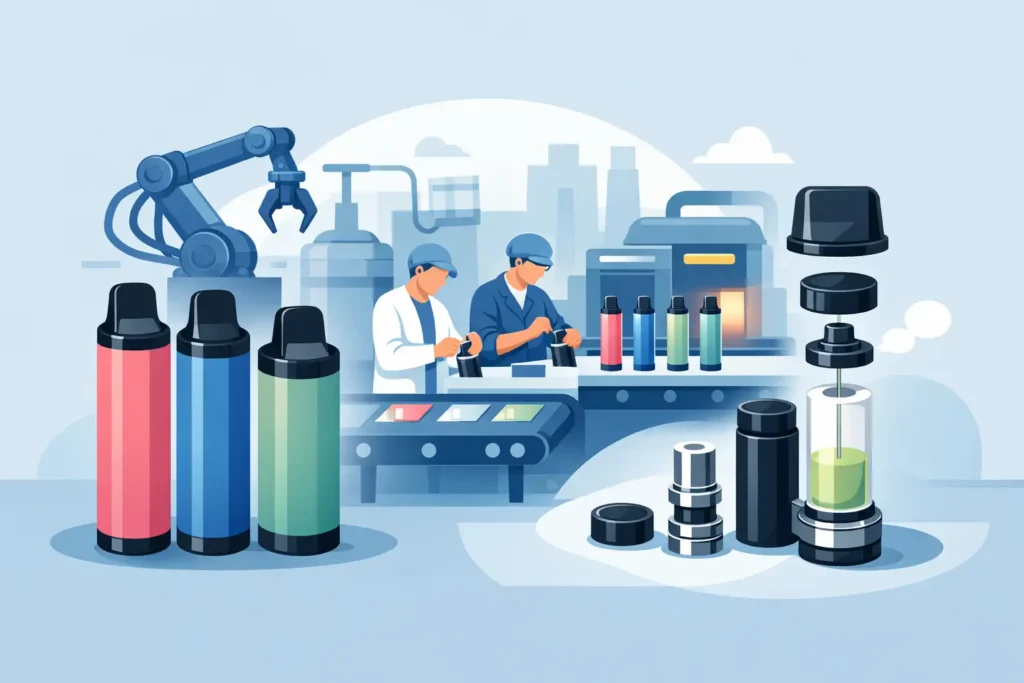
If you’ve ever cracked open a box and wondered how are disposable vapes made, the short answer is this – they’re built for speed, consistency and convenience. Every disposable is a compact mix of battery tech, e-liquid handling, coil assembly and factory testing, all packed into a device that’s meant to work straight out of the box with no setup and no fuss.
For buyers chasing big puff counts, reliable flavour and fewer dud devices, the manufacturing side actually matters. A disposable might look simple from the outside, but there’s a lot going on inside that slim shell. The quality of each part, and how well those parts are assembled, is what separates a smooth, satisfying draw from a device that burns early, leaks in your pocket or drops flavour halfway through.
How are disposable vapes made in a factory?
Most disposable vapes are made on assembly lines that combine automated production with manual quality checks. The process usually starts with separate components being produced in batches. That means the outer casing, battery, coil, wick, pod reservoir, mouthpiece and airflow parts are all manufactured before final assembly begins.
The casing is commonly made from lightweight plastic, aluminium alloy or a mix of both. Plastic keeps costs down and helps with large-scale output. Metal sections can improve durability and give the device a more premium feel in the hand. For high-puff-count devices, manufacturers often use larger housings to fit stronger batteries and bigger e-liquid reservoirs.
Inside that shell sits the battery, usually a lithium-ion cell. This is one of the most important parts of the whole device. If the battery is poor quality, it doesn’t matter how good the flavour is on paper – the vape can weaken fast, fail to fire properly or become inconsistent. Better factories source cells that can hold stable output over the expected life of the device, especially in products pushing 9000, 10000, 15000 or 20000 puffs.
After that comes the heating system. This includes the coil and wick. The coil is generally made from resistance wire or mesh material, and the wick is often cotton or a similar absorbent material that draws e-liquid toward the heating element. Mesh coils have become popular because they tend to heat more evenly and produce stronger flavour. That said, not every mesh setup is automatically better. The wick material, e-liquid thickness and battery output all need to match.
The parts that make or break performance
A disposable vape works because several small components do their job at the same time. If one part is off, the whole device can feel average.
The battery powers the coil. The coil heats the e-liquid. The wick feeds liquid into the coil. The airflow path controls how tight or loose the draw feels. The reservoir stores the e-liquid, and the mouthpiece shapes the final inhale. On auto-draw devices, there’s also a sensor that detects a puff and activates the heating system.
This is why two disposables with the same puff count can perform very differently. One might deliver clean flavour and solid vapour right through to the end, while another fades early. Puff count on the box is only part of the story. Build quality matters just as much.
For brands that move serious volume, consistency is a big selling point. Buyers want to know the next device will hit like the last one. That comes down to repeatable manufacturing, stable materials and proper testing before units get packed and shipped.
How the e-liquid is prepared and filled
The e-liquid side of production is tightly controlled in better factories. Before filling starts, the liquid is mixed in larger batches using ingredients such as propylene glycol, vegetable glycerine, flavourings and nicotine where applicable. The exact ratio affects throat hit, vapour output, flavour intensity and how well the liquid works with the coil.
Thicker liquid can produce a denser vape, but if it’s too thick for the wick, performance can suffer. A thinner mix may wick faster, but can also increase the chance of leakage if the design isn’t dialled in. Good manufacturers build the device around the liquid, not the other way around.
Once mixed, the e-liquid is filled into the pod or internal tank using automated filling machines. Precision matters here. Underfilling can cut device life short. Overfilling can cause leaking, spitback or airflow issues. After filling, the tank is sealed so the liquid stays contained during storage, freight and everyday use.
For high-puff devices, this stage is even more important because there’s more liquid involved and more time for weak seals to fail. A disposable built for long use has to manage liquid flow properly from the first puff to the last.
Coil priming, sealing and final assembly
After the reservoir is filled, the wick usually needs time to absorb the liquid properly. This is called priming. If the wick isn’t saturated enough before first use, the coil can burn the material too early, which wrecks flavour almost instantly. That burnt taste is one of the fastest ways for a device to end up in the rubbish.
Once primed, the disposable moves into final assembly. The mouthpiece is fitted, airflow sections are aligned and seals are checked. In some designs, silicone plugs or internal gaskets are added to stop leakage before the device reaches the customer. Rechargeable disposables also include a charging port, typically fitted at the base, which adds another step and another point that needs proper inspection.
Then comes outer finishing. Branding, compliance markings, flavour labels and puff count details are printed or applied to the shell and packaging. This is the part customers see first, but it’s really the last layer of a much bigger production process.
Testing and quality control
This is where stronger brands separate themselves from cheap throwaway stock. Quality control can include battery checks, resistance testing, draw activation testing, leak checks and visual inspection. Some factories test every unit for basic function. Others rely more heavily on batch testing. That trade-off usually shows up in consistency.
A well-run factory wants to catch weak batteries, faulty sensors, poor seals and coil defects before the product is boxed. That doesn’t mean every device in the market is perfect. Mass production always has some risk. But lower defect rates usually come from tighter process control, not luck.
Packaging also plays a role. Individual wrapping helps protect devices from dust, damage and accidental activation. For products travelling through freight networks and warehouse systems, solid packaging is part of product quality, not just marketing.
Why some disposables last longer than others
When customers compare disposables, they often focus on puff count, flavour list and price. Fair enough. But the reason one device lasts well and another drops off early often comes back to engineering and manufacturing choices.
Battery size has to match liquid capacity. The coil has to suit the liquid blend. The airflow has to support the intended draw style. The seals have to hold up over time. Even the shape of the internal reservoir can affect how evenly the device uses the liquid. If those details are mismatched, the vape may still work, but it won’t work well for long.
There’s also a difference between claimed puff count and real-world use. Longer draws, stronger coil output and heavier use can all reduce the total number of puffs you actually get. That’s normal. Puff counts are estimates, not guarantees.
What this means for everyday buyers
If you shop disposables regularly, understanding how are disposable vapes made helps you read past the hype. Big numbers on the box are one thing. Reliable assembly, solid battery performance and proper liquid handling are what give you a better shot at getting a device that performs the way it should.
That’s why recognised brands usually get more repeat buyers than no-name stock. Manufacturing consistency matters. When a device is built properly, you notice it straight away – cleaner flavour, smoother draw, better lifespan and less chance of leaks or dead-on-arrival units.
For a fast-moving vape shop audience, that’s the real point. You don’t need a chemistry lesson. You just want gear that works, tastes right and lasts as expected. At Puff Street, that’s exactly why known disposable lines get the attention they do. Customers come back for brands that deliver, not for guesswork.
The next time you pick up a disposable, remember you’re not just buying a flavour and a puff count. You’re buying the result of battery selection, coil design, liquid formulation, filling accuracy and factory quality control packed into one ready-to-go device. If those details are done right, the difference is obvious from the first draw.